How to actually learn world geography
Most people learn the countries of the world the slow way: reading lists and looking at maps. The research on memory points to a faster way, and it is the reason every game here is built the way it is.
Recalling beats rereading
In a well-known study, psychologists Henry Roediger and Jeffrey Karpicke (2006) had students either reread a text or practise recalling it. A week later, the students who had practised recalling remembered clearly more, even though rereading had felt more productive. This is called retrieval practice, or the testing effect.
A quiz is retrieval practice. Every time you are asked "which country is this?" and have to answer, the memory gets stronger, and a wrong answer followed by the right one sticks better than a fact you only read.
Read the full guide
Short sessions, spread out
Memory fades fast at first and then more slowly, which is why one long cramming session is forgotten by next week. Spacing the practice works better: a few rounds today, a few tomorrow, a few at the end of the week. A ten-question round takes about two minutes, so it fits in a bus ride.
Learn the map, not just the names
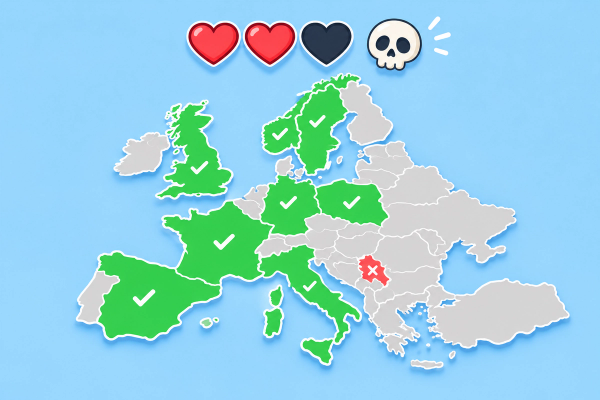
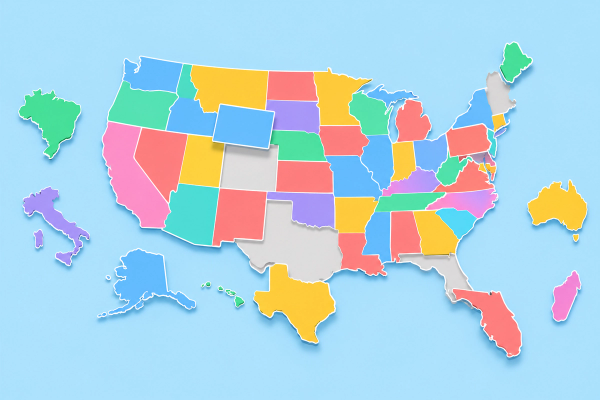
Knowing that Burkina Faso exists is not the same as knowing where it is. Map games make you place a country among its neighbours, so you remember the region, not a word. Start with the big shapes (Brazil, Russia, India), then fill in the neighbours, then the small ones. The click-the-map quizzes let you explore before you play, and you can zoom in on crowded regions like the Balkans or the Caribbean.
A simple plan for your first week
Days 1 and 2: continents and oceans, then the world map on Easy.
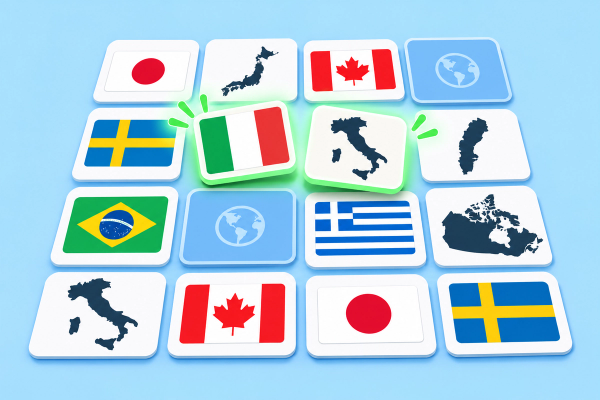
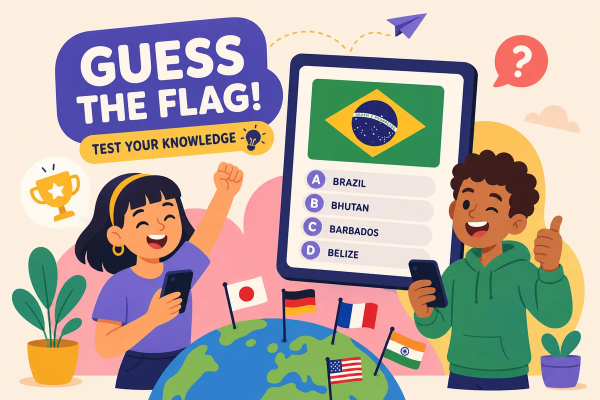
Days 3 and 4: guess the flag on Easy and Difficult, and the European map.
Days 5 to 7: capital cities, country shapes, and the continent you know least. Come back to the world map at the end of the week and compare your score.